
Be In The Know
October 30, 2025
Rooted in Community: The Best Trees to Plant in Your Virginia Beach Yard
Choosing resilient, native trees will pay dividends for years to come.
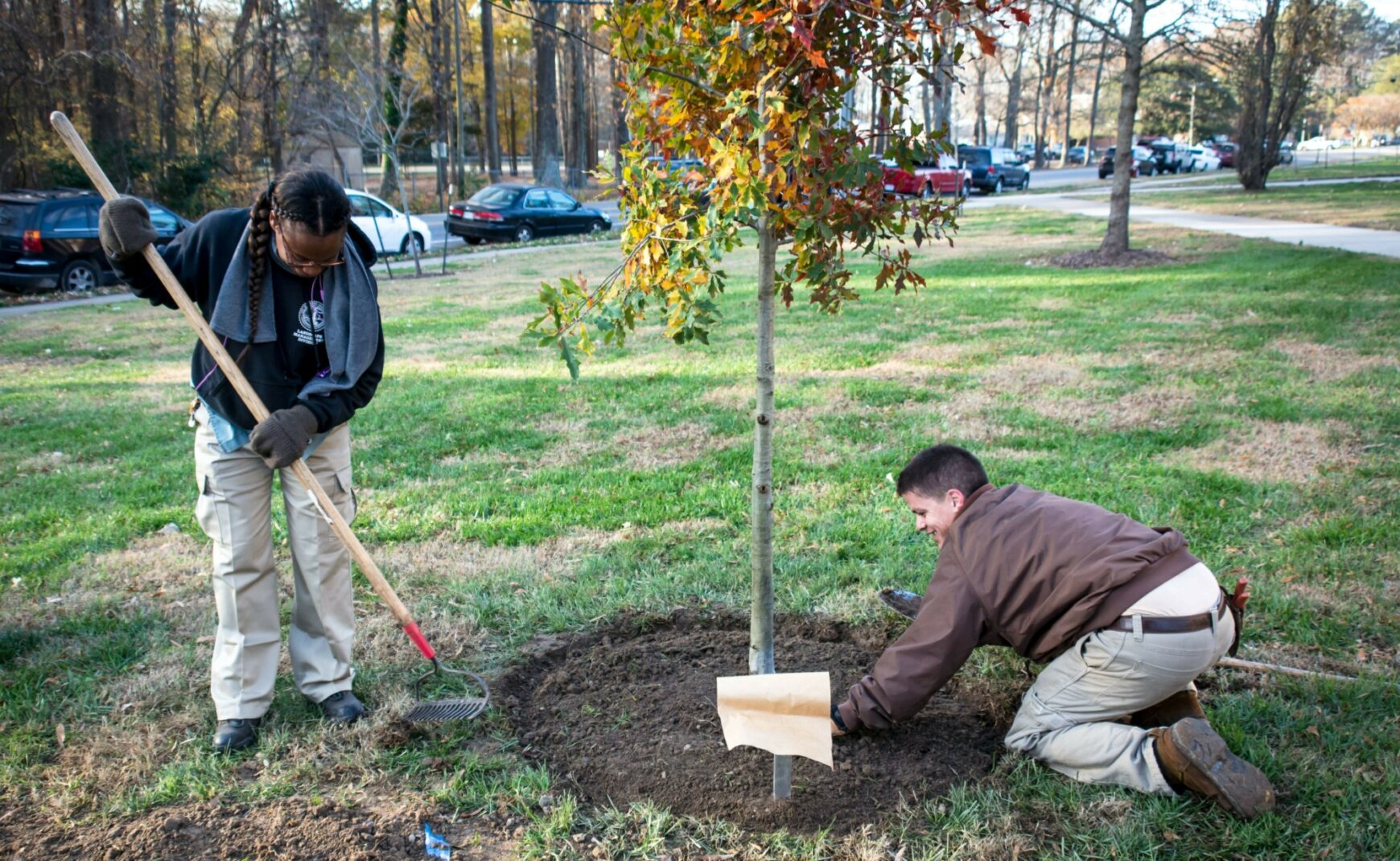
Trees play an essential role in our landscapes. They improve air quality, moderate temperatures, provide habitats for local wildlife, stabilize soils, help save energy and enhance the look and feel of our homes and neighborhoods.
The City’s urban forest – all of the trees in Virginia Beach – are a vital component of the City’s infrastructure – as important as efficient transportation and clean water. The City’s tree canopy currently is around 38% or about 3.2 million trees. That’s equivalent to $263.4 million in savings and benefits for City residents.
In 2008, the City’s Urban Tree Canopy (UTC) was estimated to be at about 36%, so progress has been made, but American Forests, a leading urban forest management, conservation and research group, recommends a City like Virginia Beach strive for at least a 40% UTC.
With that in mind, the City has adopted a goal of a 45% UTC by 2038. To help supplement City efforts such as tree planting and cyclical tree maintenance, residents can help meet this goal by planting trees on their own property.
‘Tis the Season for Tree Planting
Fall is a perfect time to plant as cooler temperatures reduce stress on young plants, but the soil is still warm enough for roots to keep growing well into early winter. Local seasonal rainfall also helps reduce the need for frequent watering. This combination allows trees to establish a strong root system before the heat and drought of summer return.
Native trees are especially good choices as they’ve adapted over thousands of years to local soils, climate, pests and pollinators. They need fewer fertilizers, pesticides and use less water. Here are a few great choices for Virginia Beach (USDA hardiness zones 8a and 8b).
Trees that Thrive Near Saltwater Environments
These trees are more tolerant of salt spray, sandy soils and coastal winds and would make a good choice for properties near the ocean or the bay.
- Southern live oak (Quercus virginiana): This official tree of Virginia Beach resists salt spray and storm surges, controls flooding and stormwater runoff and is amazingly drought-tolerant and disease-resistant. The live oak features broad branches, a wide crown and major root systems.
- Mature Size: 60-80 feet tall or more
- Planting Tips: Choose a location with plenty of room due to its size. Well-drained soil is ideal, but this tree will tolerate sandy soils well. Consider mulching to retain moisture for the first few years. The tree should be low maintenance once established.
- Eastern red cedar (Juniperus virginiana): This hardy, native evergreen conifer tolerates poor soils, wind and salt spray, making it a great choice for coastal buffer planting.
- Mature Size: 30-50 feet tall (narrow to oval shape)
- Planting Tips: These trees prefer full sun and well-drained soil; avoid water-logged spots if possible.
Trees that Absorb Lots of Water
If you have low spots in your yard or areas that collect water after a storm, these trees can help stabilize soil and handle moisture well.
- River birch (Betula nigra): This native birch species is well adapted to moist, wet soils such as low spots or areas of poor drainage and are a great choice for a rain garden or near drainage swales.
- Mature Size: 40-60 feet tall
- Planting Tips: Provide full sun to partial shade and mulch to moderate moisture. Avoid planting close to structures due to size and root growth.
- Sweetbay magnolia (Magnolia virginiana): This variety handles moist, swampy soils well and tolerates coastal environments. It features fragrant, creamy-white flowers and shiny leaves with silvery undersides.
- Mature Size: 20-30 feet tall
- Planting Tips: Plant in partial shade to fool sun. Moist soil is preferred.
Edibles
Growing your own food is rewarding and doesn't have to be limited to a vegetable garden. By planting trees with edible fruit or nuts, you can create a beautiful, low-maintenance landscape that provides fresh food for years to come.
- American persimmon (Diospyros virginiana): This tree produces male or female flowers, so you may need another variety in the area to get the tree to fruit. However, there are some varieties that have been cultivated so that a lone tree can produce fruit. Check which type it is before planting.
- Mature Size: 30-60 feet tall
- Planting Tips: Select a site with moist, but well-draining soil in an area that gets ample sun.
- Pawpaw (Asimina triloba): The pawpaw produces a creamy, banana-like fruit with tropical flavor.
- Mature Size: 15-25 feet tall
- Planting Tips: These trees thrive in shaded or partly sunny areas and prefer moist, well-drained soil. Plant at least two for cross-pollination and better fruit yield.
- Black walnut (Juglans nigra): The black walnut is known for nuts with a rich, earthy flavor and provides valuable hardwood.
- Mature Size: 50-75 feet tall
- Planting Tips: Grows best in deep, fertile, well-drained soil with full sun. Note however that it releases juglone, a natural compound that can inhibit the growth of some nearby plants, so give it plenty of space.
Brilliant Foliage or Flowers
- Red maple (Acer rubrum): This adaptable native tree is particularly beautiful in the fall with its brilliant autumn foliage. It is also practical due to its speedy growth and great water absorption.
- Mature Size: 40-70 feet tall
- Planting Tips: Thrives in low areas that stay damp and prefers acidic, moist soil and full to partial sun.
- Eastern redbud (Cercis canadensis): This smaller native tree blooms early in spring with rosy-pink flowers before the leaves emerge.
- Mature Size: 20-30 feet tall
- Planting Tips: Plant in well-drained full sun to partial shade.
Talk to the Experts at Autumn in the Air Nov. 1
Virginia Beach Parks & Recreation’s third annual Autumn in the Air festival will once again feature TreeTopia. Come out to Mount Trashmore Park, Saturday, Nov. 1, from noon to 5 p.m. and meet the Parks & Recreation Forestry and Horticulture Teams. They, along with community partners, will share information about the importance of trees in our community and can help offer guidance for your backyard grove. For event details, visit VirginiaBeach.gov/AITA.
To learn more about Virginia Beach’s urban forest, visit Parks.VirginiaBeach.gov/UrbanForestry.
Keep Reading
See All PostsBlog
Blog
Blog

-
Calendar News Blog Hot Topics Multimedia Social Media Mobile Apps